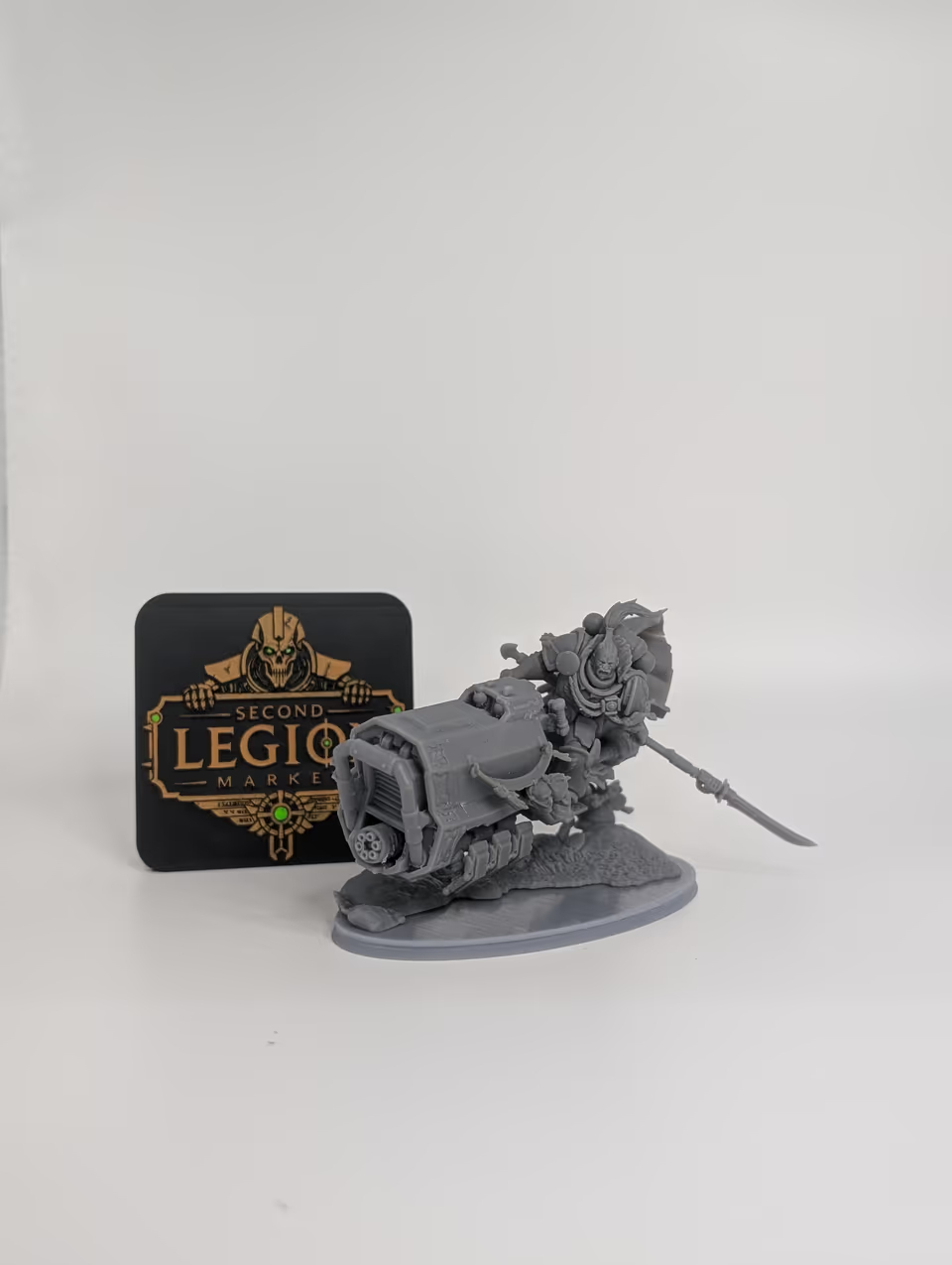
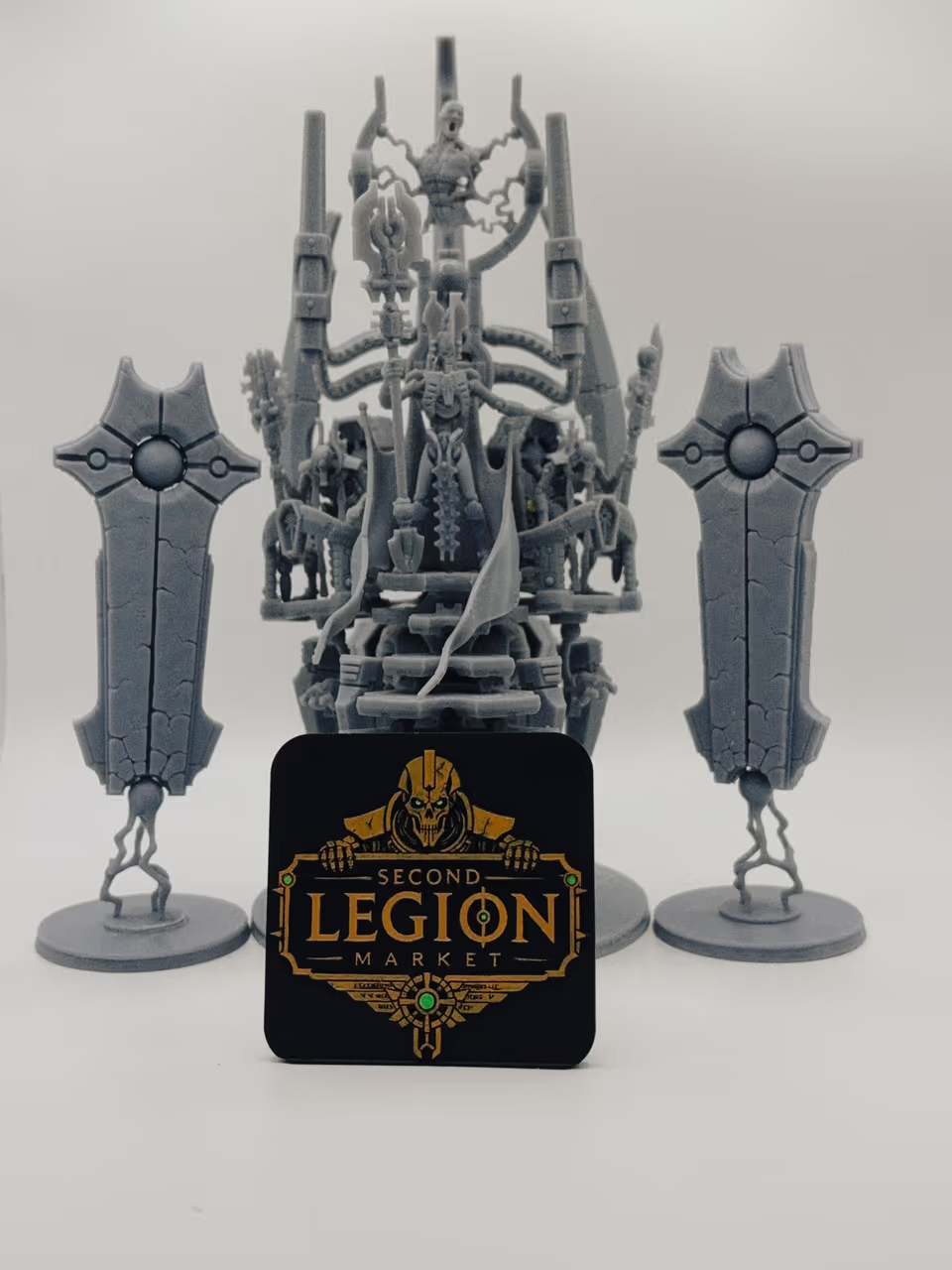
There was a time when buying a resin printer was an act of faith. You eyed the FEP nervously, feared the LCD, and a single failed peel could ruin your evening. That time is over.
In 2026, for less than a Mars 2 Pro cost in 2021, you get 16K screens, vat heaters, AI failure detection and tilt-vat mechanisms that have killed 90% of the classic problems. The question is no longer “can I print this?” but “which one of these five?”.
The piece opening this article, our Necron Silent King, is printed today on the first machine listed below. The gap between these five shows up less on the finished mini and more in how many you can produce without pain.
This piece focuses on MSLA with monochrome LCDs: what fits on a desk and covers 95% of needs for 28-32mm miniatures. Pro DLP machines (Phrozen Sonic Mighty Revo, Elegoo Jupiter SE) are a different league, and a different invoice.
1. Elegoo Saturn 4 Ultra 16K — the answer when you stop wanting to think
Search “best resin printer 2026” on any forum and this is the first result. For once, the crowd is right.
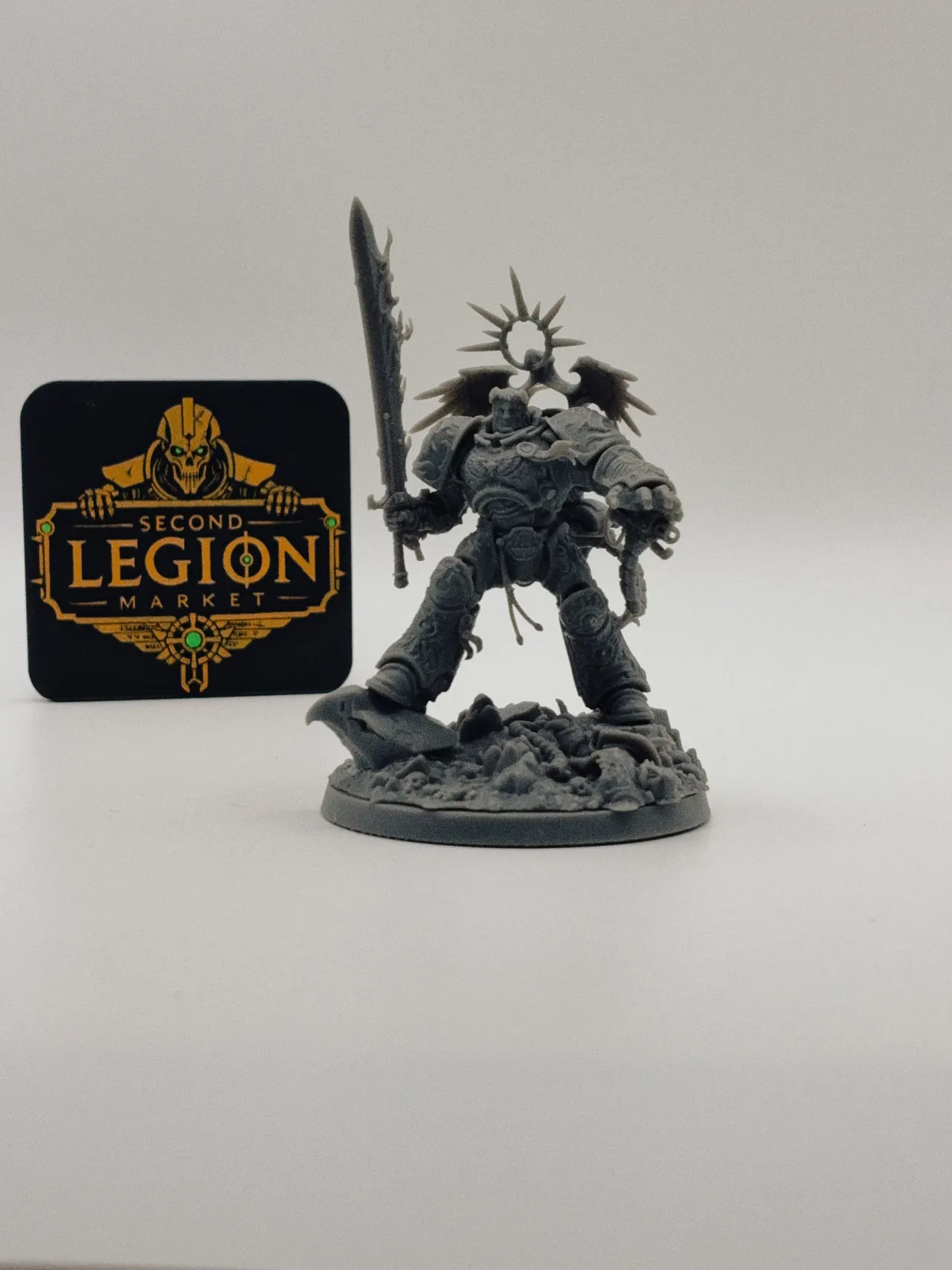
16K LCD (11,520 × 5,120 px), build volume 218 × 122 × 220 mm. Room for a full Space Marine squad or a centerpiece with its bases. A figure like Guilliman comes off in a single pass with room to spare.
Tilt-vat release, 30 °C vat heater, and a camera that flags failures before you do. Add WiFi for clusters and a mature Chitubox/Voxeldance pipeline.
Honest caveats: tilt adds about 3.5 seconds per layer compared to traditional MSLA, and the FEP wants replacing every 3-6 months. Nothing the reliability gain doesn't offset. Around €450 across EU resellers, and the best three-year investment in the category.
2. Anycubic Photon Mono M7 Pro — the other face of pro
If you're a pixel snob, this one will hit. 14K (13,320 px on the X axis), build a finger taller than the Saturn (223 × 126 × 230 mm), and a dynamic vat heating system that adjusts temperature based on resin state. Pretty engineering.
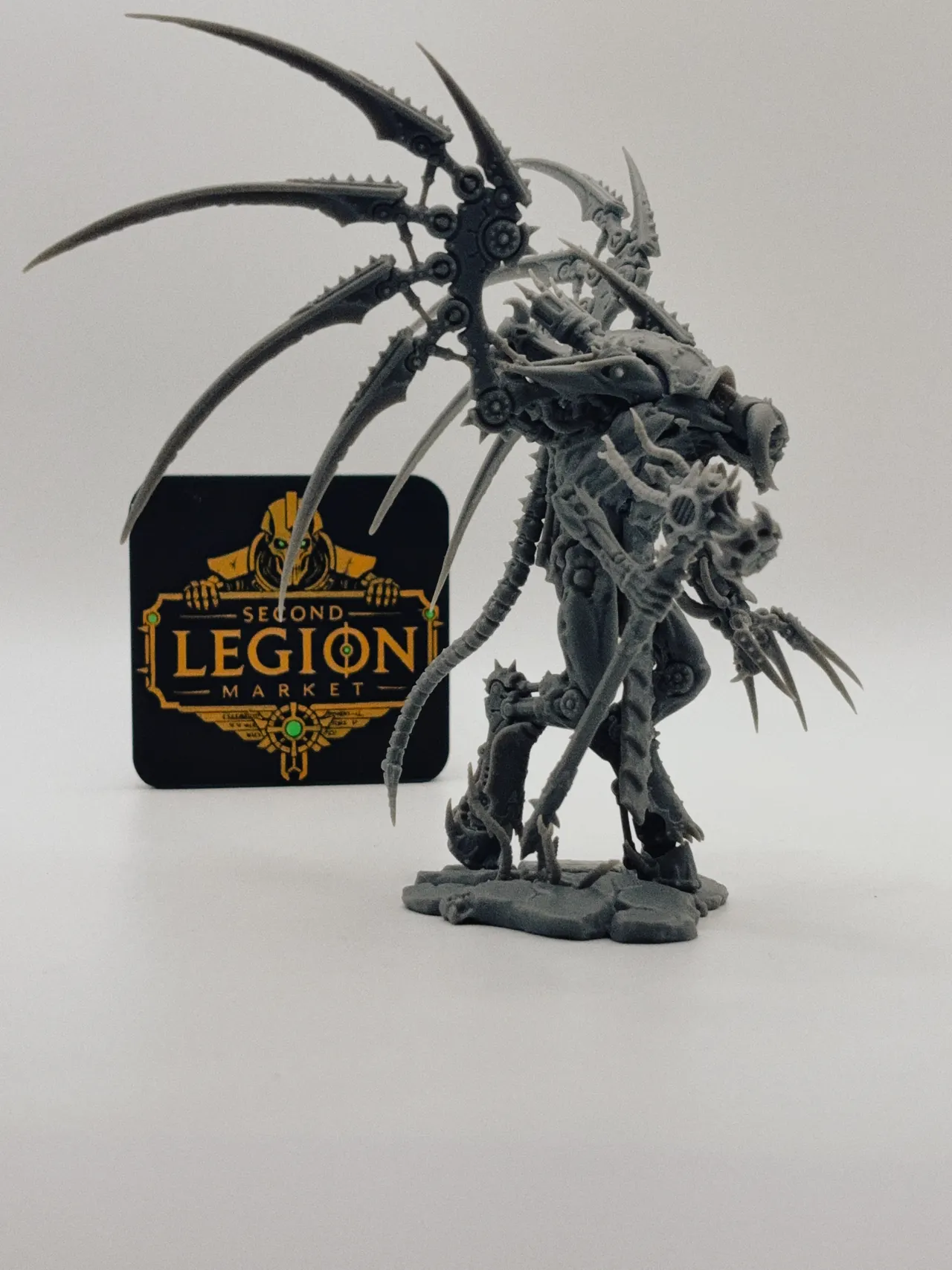
AI Vision Guard catches failures earlier than Elegoo's, but also throws more false positives. Useful if you read logs; frustrating if you're three weeks into the hobby. On a painted mini like Vashtorr, you won't tell it apart from the Saturn 4 Ultra.
Around €500. Worth it if you're already in the Anycubic ecosystem or you need the extra height for modular terrain. Otherwise, save the money and go Saturn.
3. Phrozen Sonic Mini 8K S — the veteran that keeps not breaking
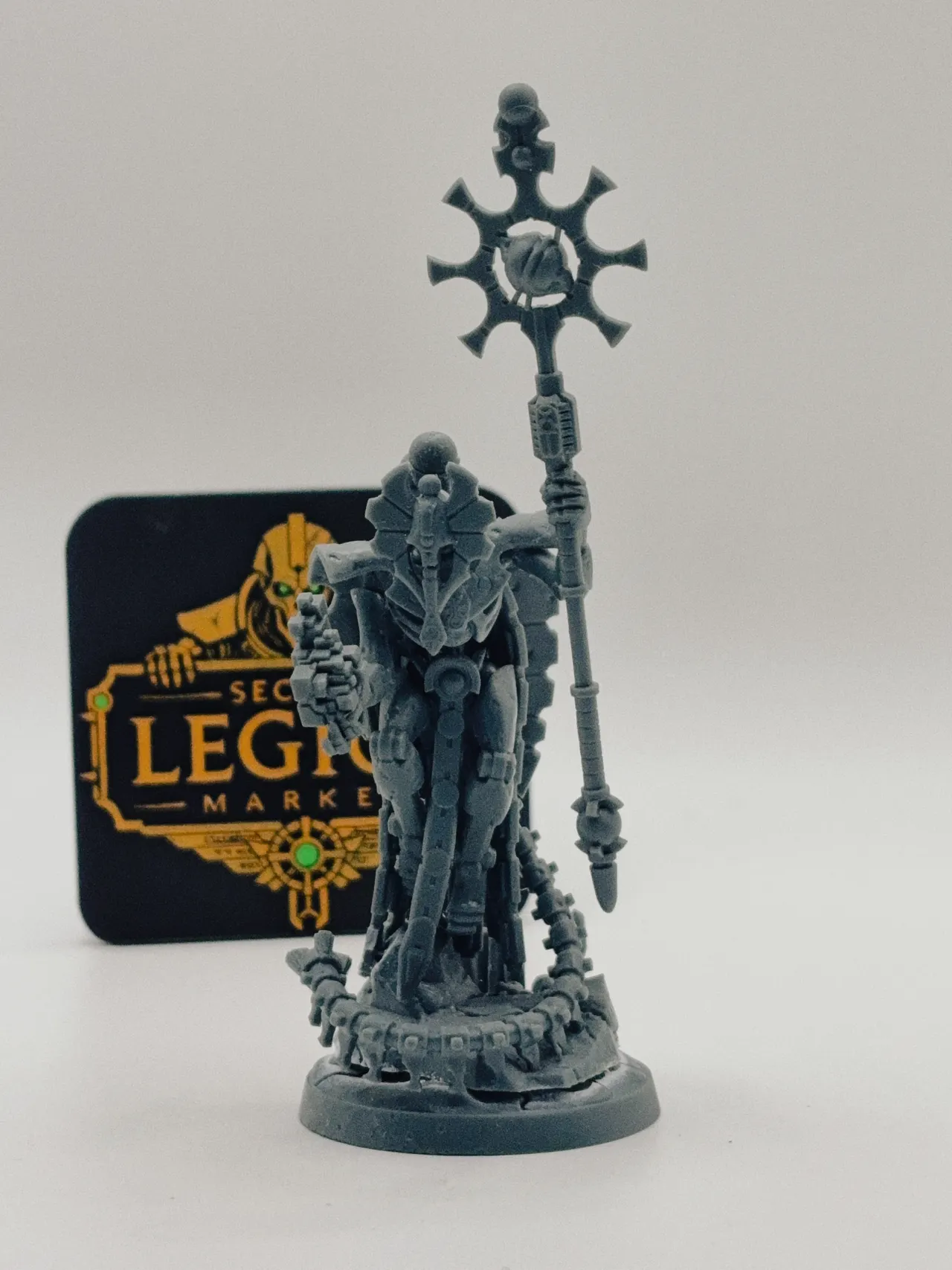
Phrozen has spent years building a strange reputation: the brand sculptors and small studios reach for when the part matters more than the feature checklist. In 2026, the Mini 8K S is still that machine.
7.1" screen, 22 μm XY resolution. Yes, there are 12K rivals at 19 μm; nobody will tell three microns apart on a painted mini under hobby lighting. What you will tell apart are the print profiles: there are years-old, community-tuned dial-ins for Siraya Tech Blu, Sunlu ABS-Like and Elegoo Standard. That saves entire evenings.
Small build (165 × 72 × 180 mm). Designed to print 1-4 minis well, not full boxes. A single hero like Orikan the Diviner is its sweet spot. No AI, no WiFi: switch it on, it prints, it turns off.
Real downsides: no tilt-vat (traditional release, FEP takes more abuse), no heater, LCD swap every ~2,000 hours. But the track record is brutal: 94% success across 300+ prints in independent tests. Price: ~€349.
4. Elegoo Mars 5 Ultra — the first printer that won't make you quit
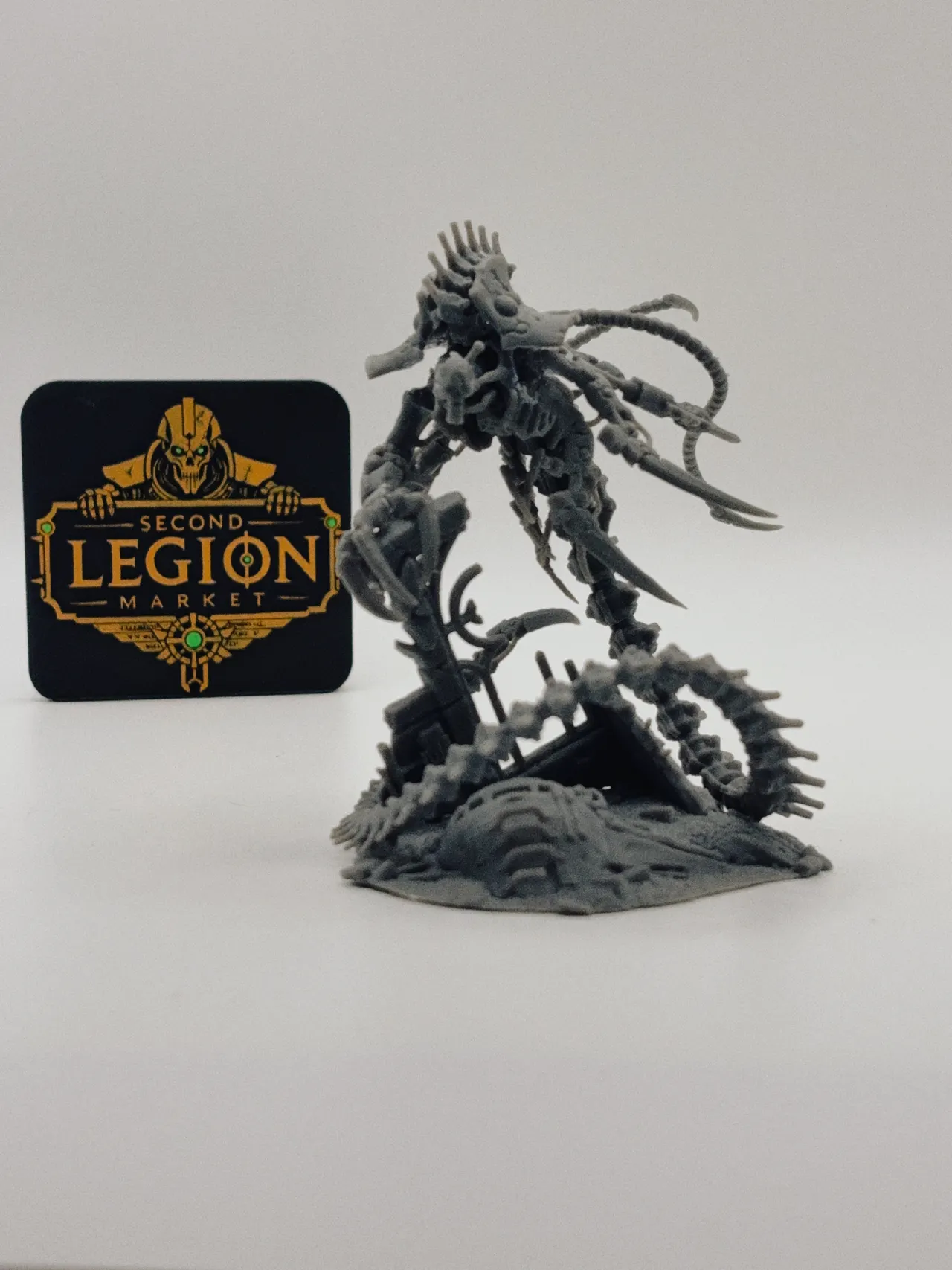
For a beginner, the problem isn't peak resolution. It's not giving up after three failed prints. Elegoo did the homework here.
9K screen on 7" (18 μm XY), auto bed leveling, tilt-vat, mechanical collision sensor and AI failure detection. The learning curve narrows to “wash and cure”. Build of 153 × 77 × 165 mm: enough for a hero like Nekrosor Ammentar without frustration.
The point that matters: a painted mini off this machine is indistinguishable from one off the Saturn 4 Ultra. The gap between them isn't hardware — it's how many minis you print at once. Price: €270-340. Best value-for-money in the 2026 lineup.
5. Anycubic Photon Mono 4 — the realistic floor
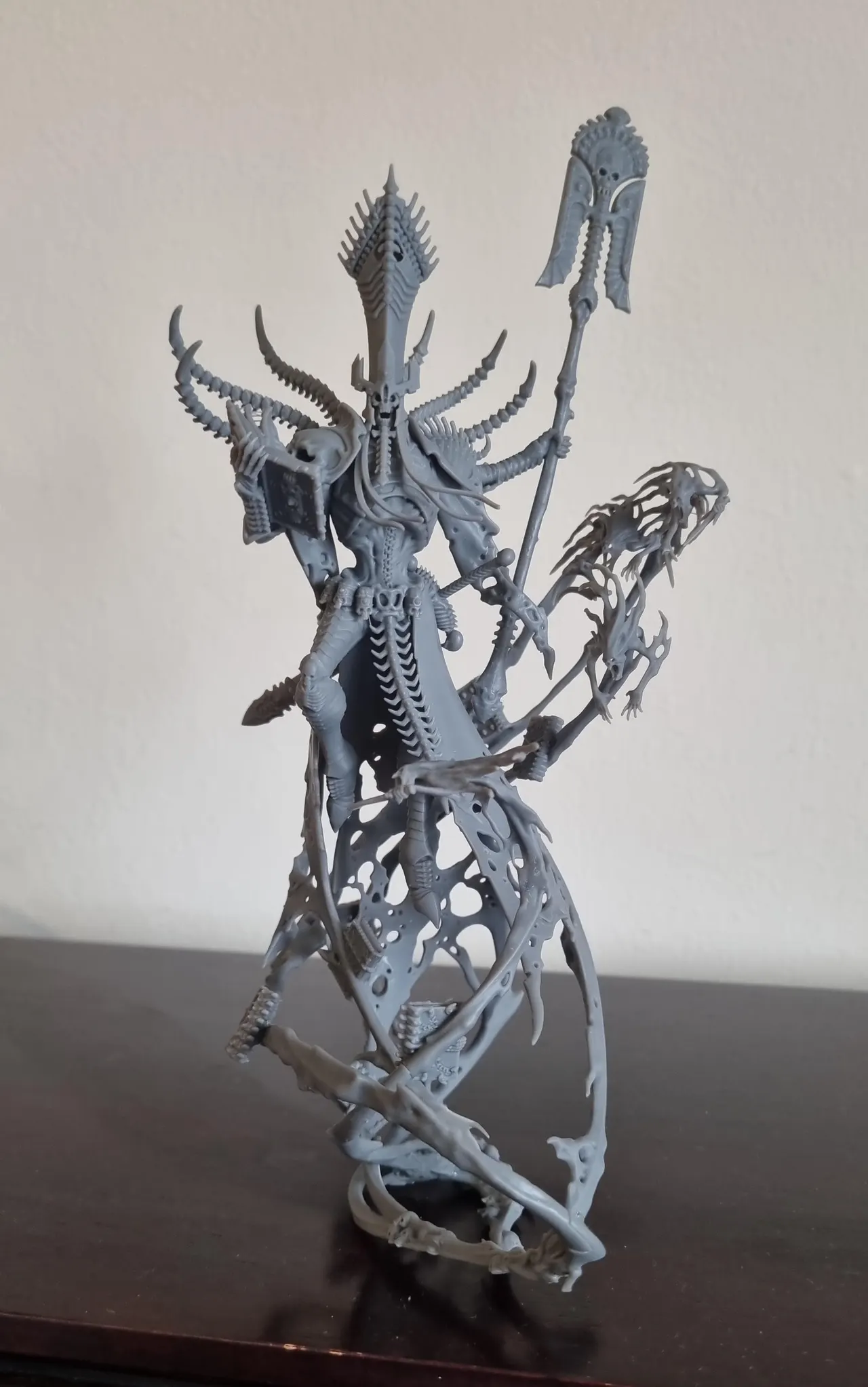
The lowest you can go in 2026 without stepping into swamps. For ~€169, you get 10K on a 7" screen, a 153 × 77 × 165 mm build and a now-polished Photon Workshop. No AI, no tilt-vat; this is classic resin, well executed.
The real argument for this printer isn't technical, it's psychological. If you don't yet know whether 3D printing will stick, spending less than a Combat Patrol box to find out is reasonable. If it sticks, you flip the Mono 4 to a mate and move up to the Mars 5 Ultra without regret.
Decide in thirty seconds
First printer, flexible budget: Mars 5 Ultra.
Printing 6-12 minis at a time, reliability is critical: Saturn 4 Ultra 16K.
Minis only, top fidelity, “it just works” machine: Phrozen Sonic Mini 8K S.
Want to dip in under €200: Photon Mono 4.
Already in Anycubic, or you need the extra height: Photon Mono M7 Pro.
One note before we close: the printer is half
The resins that actually move the needle in 2026 are three: Siraya Tech Blu (impact and detail), Sunlu ABS-Like (mechanical strength on thin edges, weapons, antennas) and Elegoo Standard 8K (best price-to-quality for batches). Proprietary “miniature” resins are still too brittle on thin sections. Skip them.
And the last inconvenient truth: the gap between a mini that looks like a print and one that looks like a pro product lives in washing, curing and painting, not in whether your LCD is 8K, 12K or 16K. Buy within your budget, not above. The rest is on your hands.