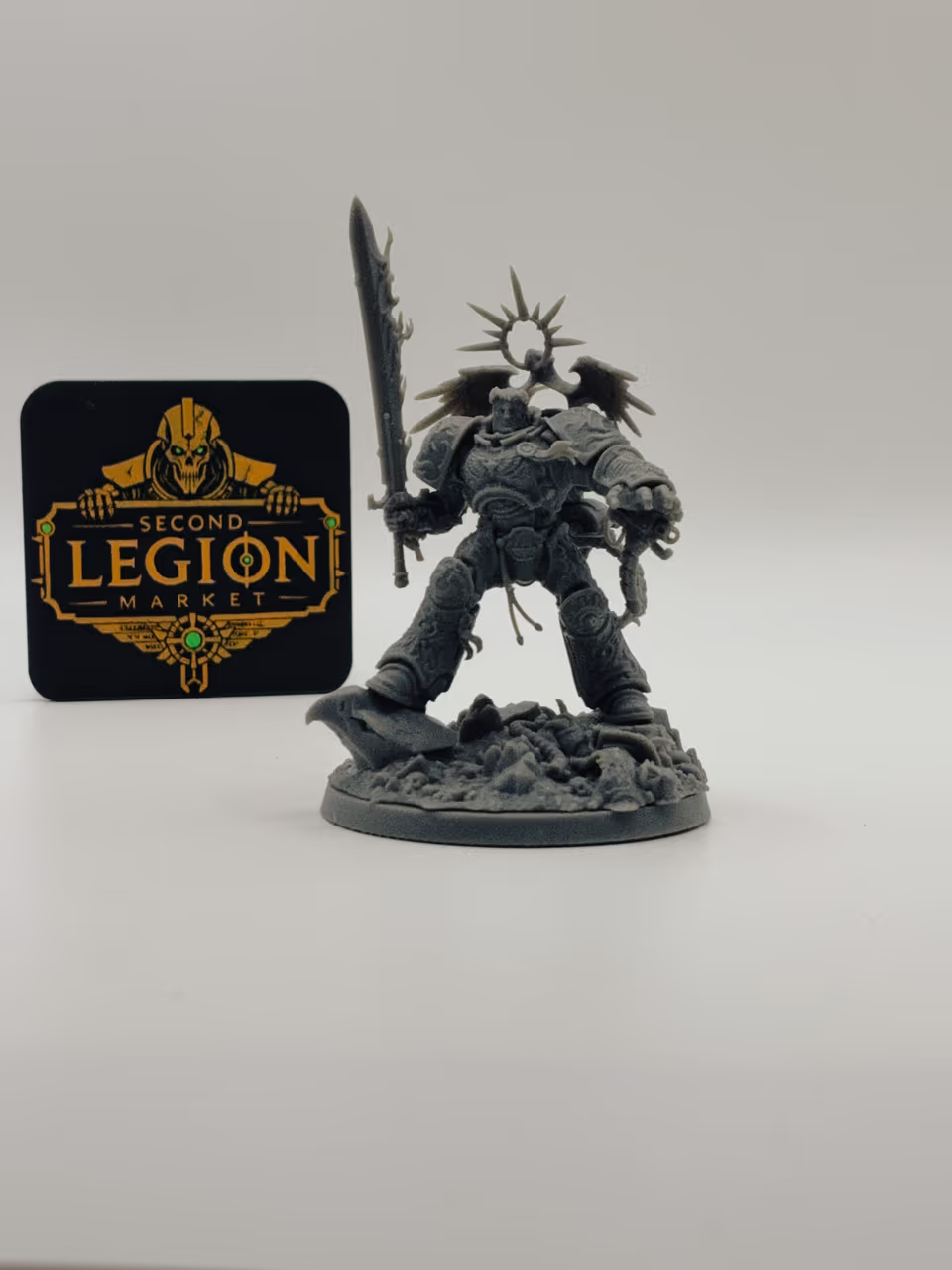
There's an uncomfortable truth about Necrons that no codex prints in bold: they're the only faction that can lose a turn and come back fighting the next one. Sixty million years of exile beneath the crust of forgotten worlds, involuntary biotransference, souls poured into living alloy. When they wake up, they aren't looking for revenge — they're looking to take back what they should never have lost.
If you're starting the faction, the question isn't "which is the most broken unit?" — it's "which of these six models tells a story I want to paint?". What follows is a tour through the six Necron miniatures currently in our catalogue, ordered from least to greatest hierarchy: from rogue cryptek to supreme king. Short lore, 10th-edition rules verified on Wahapedia, and an aesthetic reason for each piece.
Every rule quoted is straight from Wahapedia 10th. If it isn't there, it isn't here. Zero invention.
1. Nekrosor Ammentar — the hunter who scares other Necrons
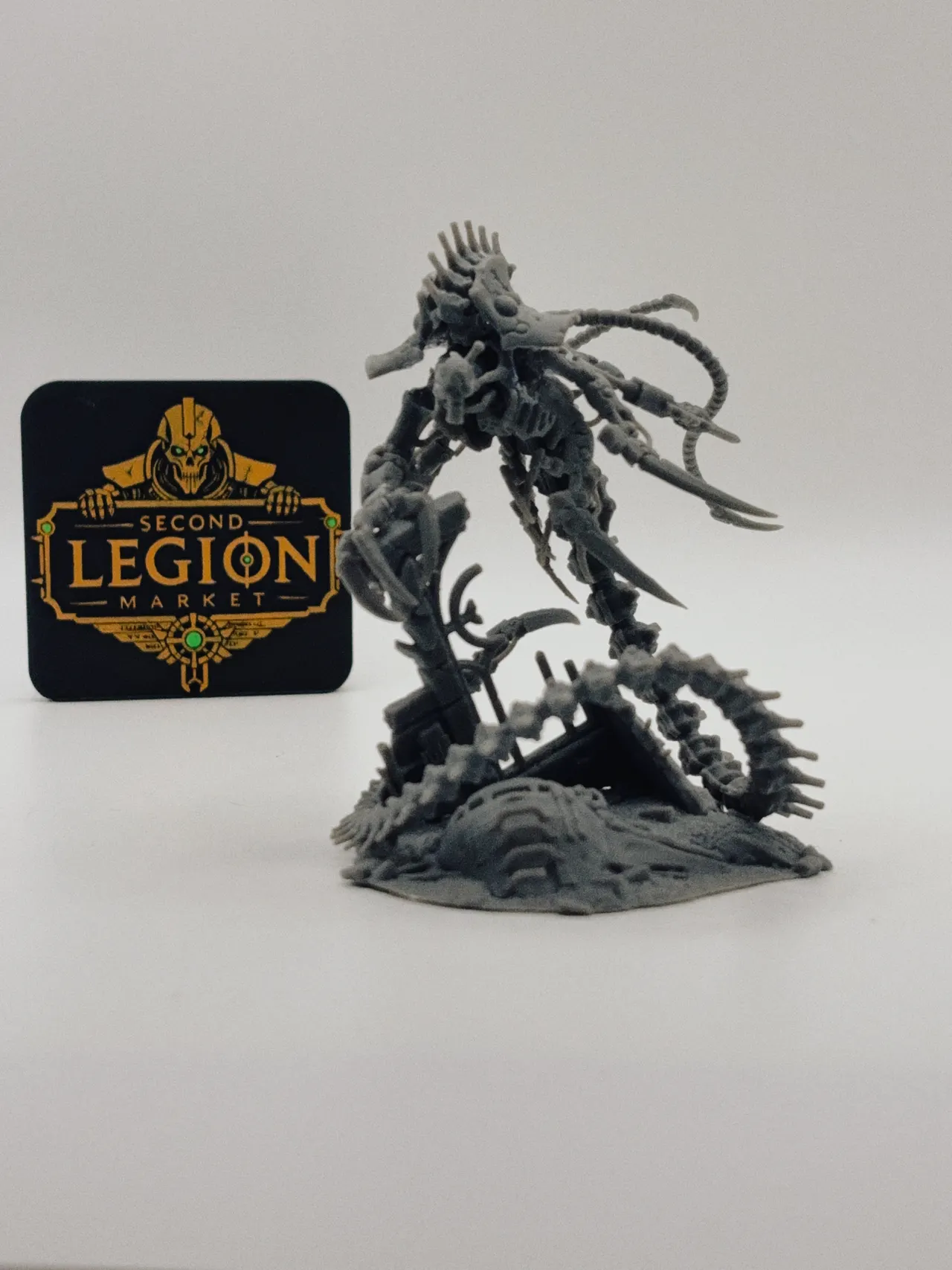
Many believe him to be the first Necron to fall to the Destroyer Curse, the origin of the Red Harvest crusade that scours away anything organic in its path. The truly disturbing part isn't what he does — it's what's missing. His memories have been erased from the Necron collective consciousness, and only the Silent King has the protocols to do that. He walks with the lucidity of an Overlord and the rage of an out-of-control Wraith. His obsession: reuniting the Shards of the Nightbringer to bring the Star God back to full power, a plan opposed by almost every galactic faction — Necrons included.
On the table, a Lokhust Lord with Fights First — he swings before almost anything that stands in his path. The aura Infectious Murder-madness buffs the attacks of the friendly unit he leads — turning a standard escort into a pack of butchers. While operating within 3" of allies he gains Lone Operative, absurdly hard to target at range. Armed with barbed claws, the Unmaker Gauntlet, enmitic disintegrators and a whip-like bladed tail. A whirlwind of weapons made flesh.
The sculpt is the loudest 2026 release of the year: a serpentine Destroyer spine topped by the sinister elegance of a Lord. If you want the most talked-about piece of the current meta and an all-melee Necron list, Nekrosor Ammentar is where you start.
2. Orikan the Diviner — the chronomancer who decides when "now" arrives
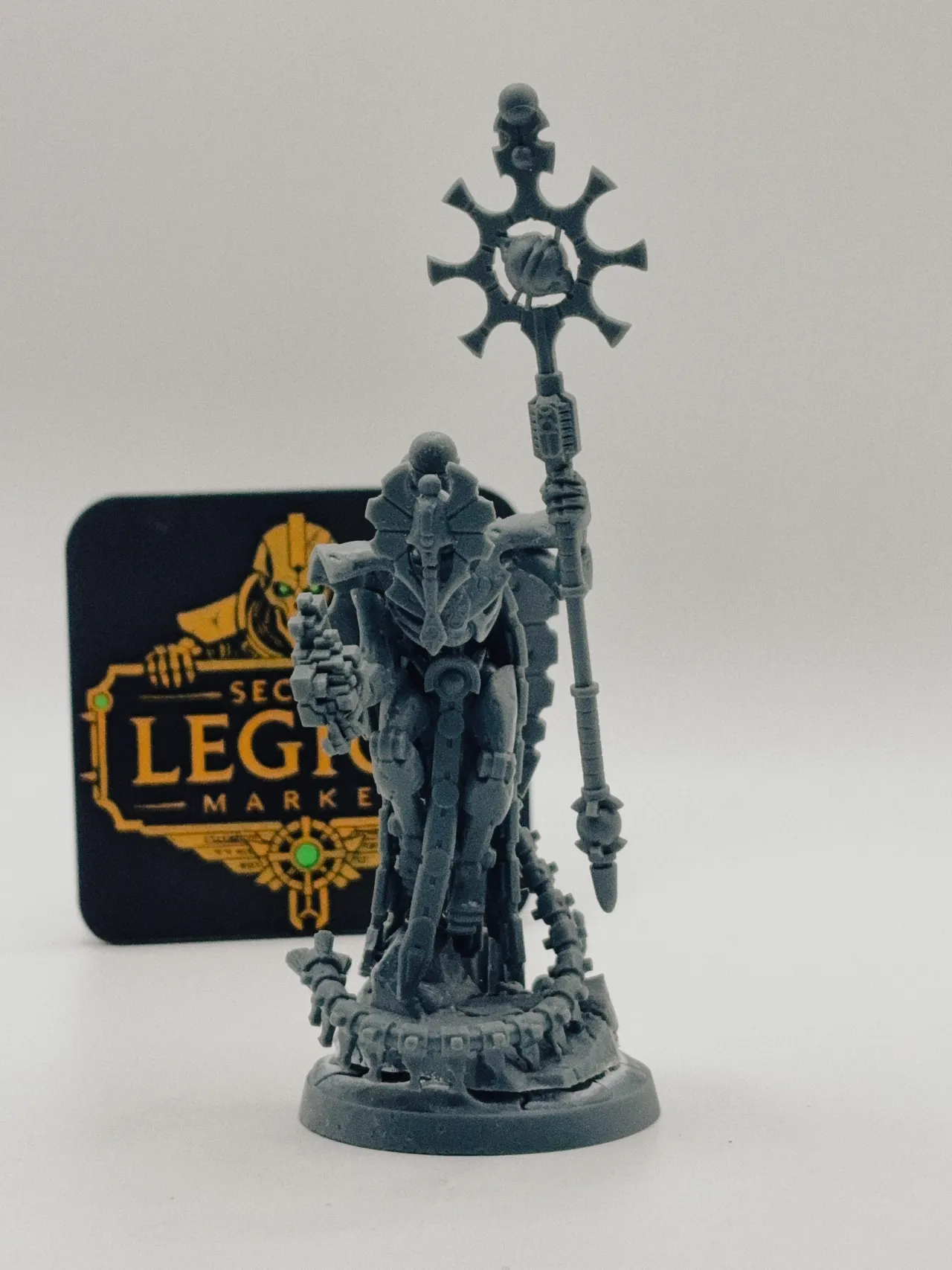
Orikan doesn't read the future: he calculates it. A chronomancer cryptek obsessed with impossible cosmic equations and with humiliating Trazyn the Infinite (a legendary faction rivalry). Where other crypteks build, Orikan predicts — and when the stars align, he transforms into an almost divine entity, an Orikan Empowered of astral power. In his tomb worlds sit probability charts that would take an Imperial Magos ten lifetimes to decipher.
Headline ability: Master Chronomancer — while leading a unit, that unit gains a 4+ invulnerable save. Turns a basic escort into a temporal fortress. His red button is Stars Are Right, once per battle: triples the Attacks and Strength of his Staff of Tomorrow and guarantees Critical Wounds until end of the Fight phase. From pure utility to character-killer in one turn.
The model is small (€13) but cinematic: medium-like pose, sharp staff, stiff cape that takes drybrush without complaints. For a new collector, Orikan the Diviner is the best price-to-utility ratio Necron hero — and a character with personality from lore to datasheet.
3. Ophydian Destroyers — the escort that erupts from underground
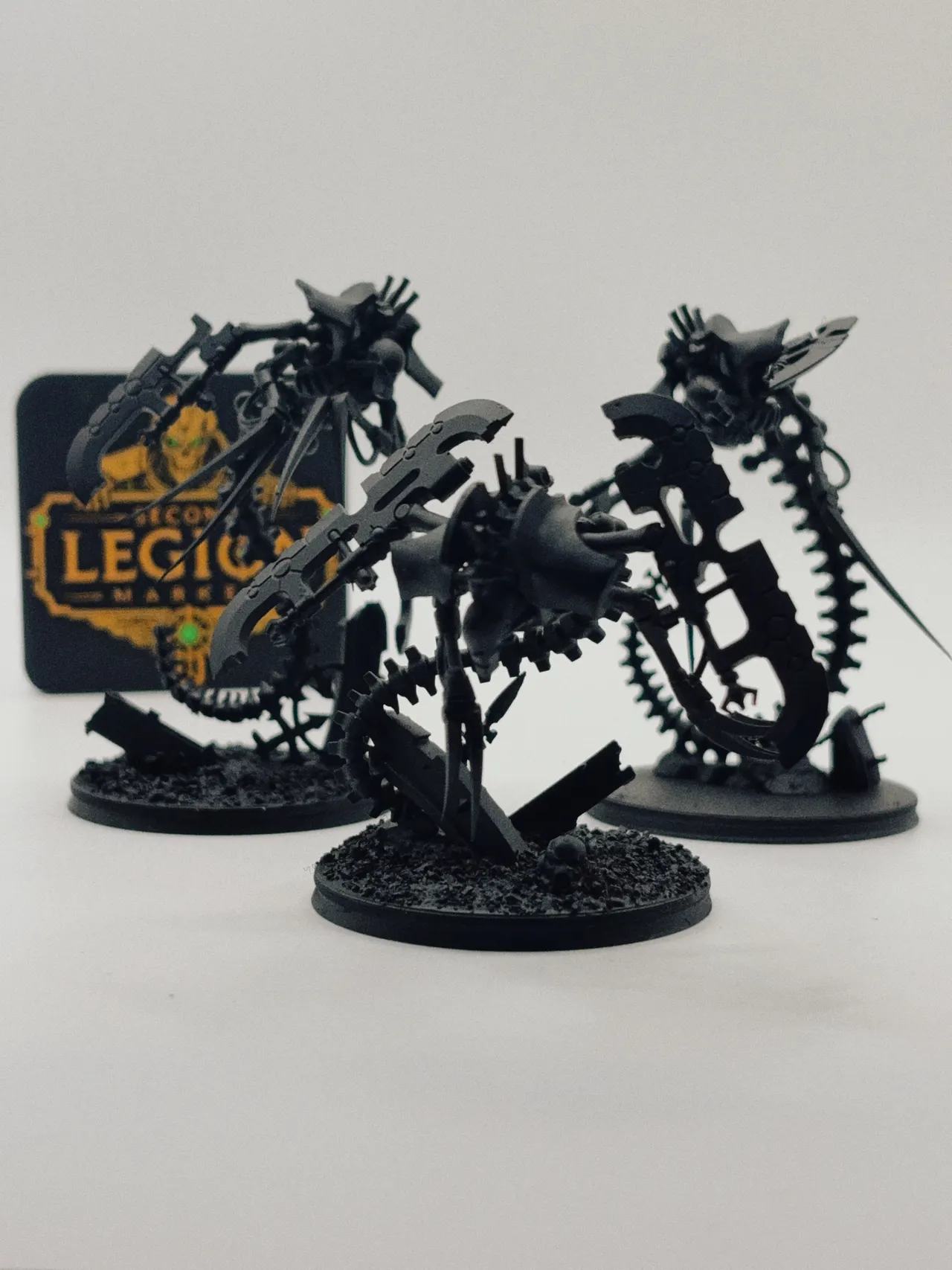
They aren't heroes, but without an escort a Necron hero is just lore. The Ophydians are serpentine cybernetics forged in the Destroyer Cult catacombs, infected by the same Curse that consumed Nekrosor. They burrow under the battlefield at depths no sensor catches and erupt where you least expect them. They're what a Lord brings along when he goes to work.
The headline ability is Tunnelling Horrors: at end of the opponent's turn, if not in engagement range, they leave the battlefield and redeploy in their next Movement phase anywhere 9"+ from enemies. On-demand Deep Strike, every turn. They fight with Hyperphase Threshers (Strength 4, AP-2, Damage 2), and one per three models carries a Plasmacyte granting Devastating Wounds in melee once per battle.
Three figures on 50 mm bases, dynamic poses, cryo-fluid trails. The sculpt tells the story on its own: these things don't walk, they coil. If you play Nekrosor or any Lokhust Lord, the Ophydian Destroyers are the canonical escort.
4. Canoptek Doomstalker — the reminder that Necrons are machinery
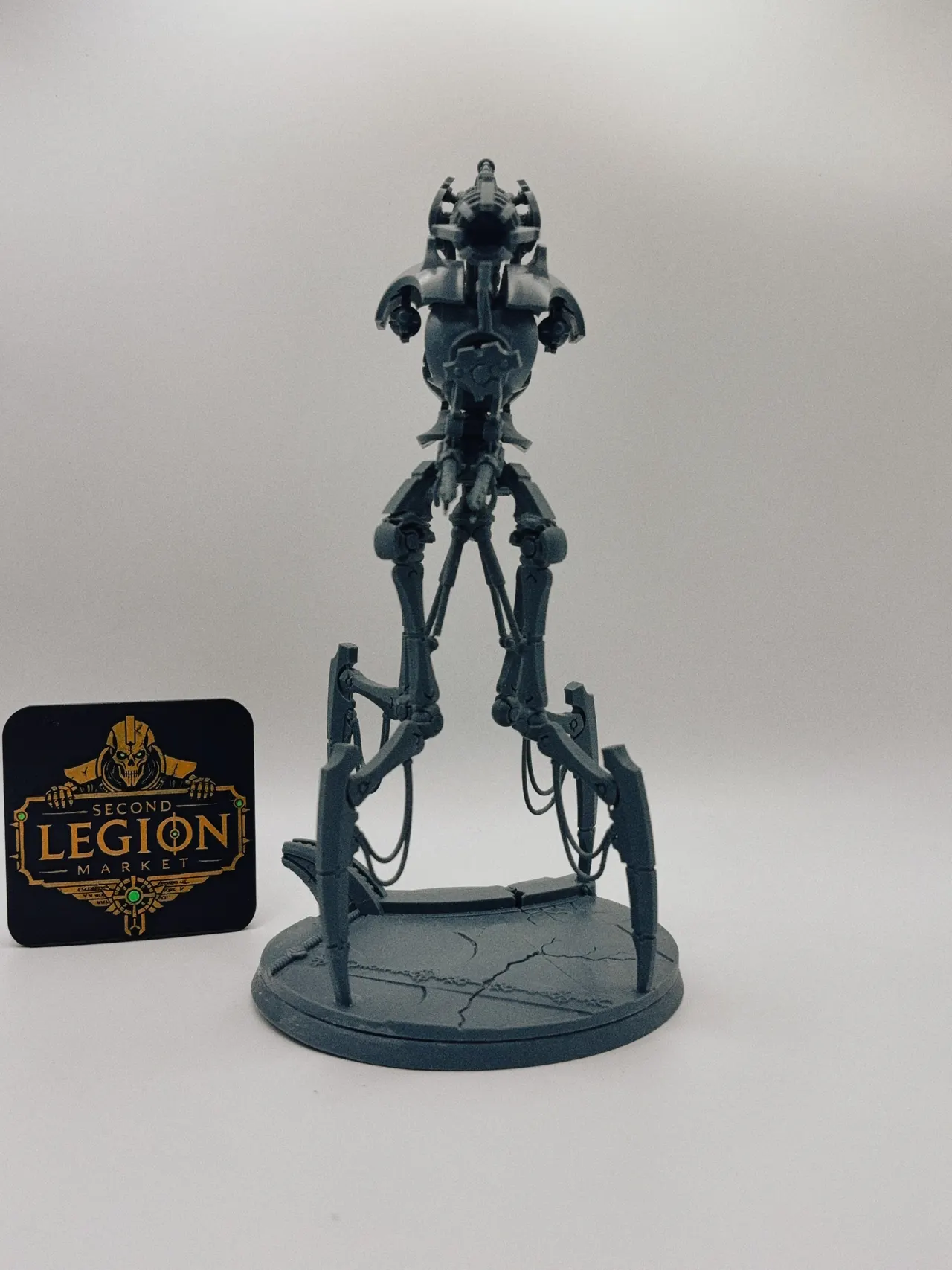
Necrons are not undead. They are machines. Nothing reminds you of this better than a Doomstalker: four long legs, an oversized cannon, an autonomous Canoptek mind that picks its target before you do. Built by the Canoptek Forges to guard tombs and depopulate planets from afar, they are Martian tripods designed sixty million years before Wells. And still working.
Its weapon is the Doomsday Blaster: 48" range, Blast, Heavy, Strength 14, AP-3, Damage D3. Kills transports and shreds heavy-infantry blocks. The rest of the datasheet earns the value: Reanimation Protocols D3 each Command phase, Sentinel Construct so overwatch hits on 5+, and Deadly Demise D3 — when it dies, it bites anything nearby. Hard to kill, hits hard from afar, bites on the way out.
The sculpt is walking architecture: needle-thin legs, obelisk cannon, sensor-head tilted at that recognizable predator angle. The Doomstalker is the piece that opens your list when you want to remind your opponent that the green army isn't just melee.
5. C'tan Shard of the Nightbringer — a dark god in chains
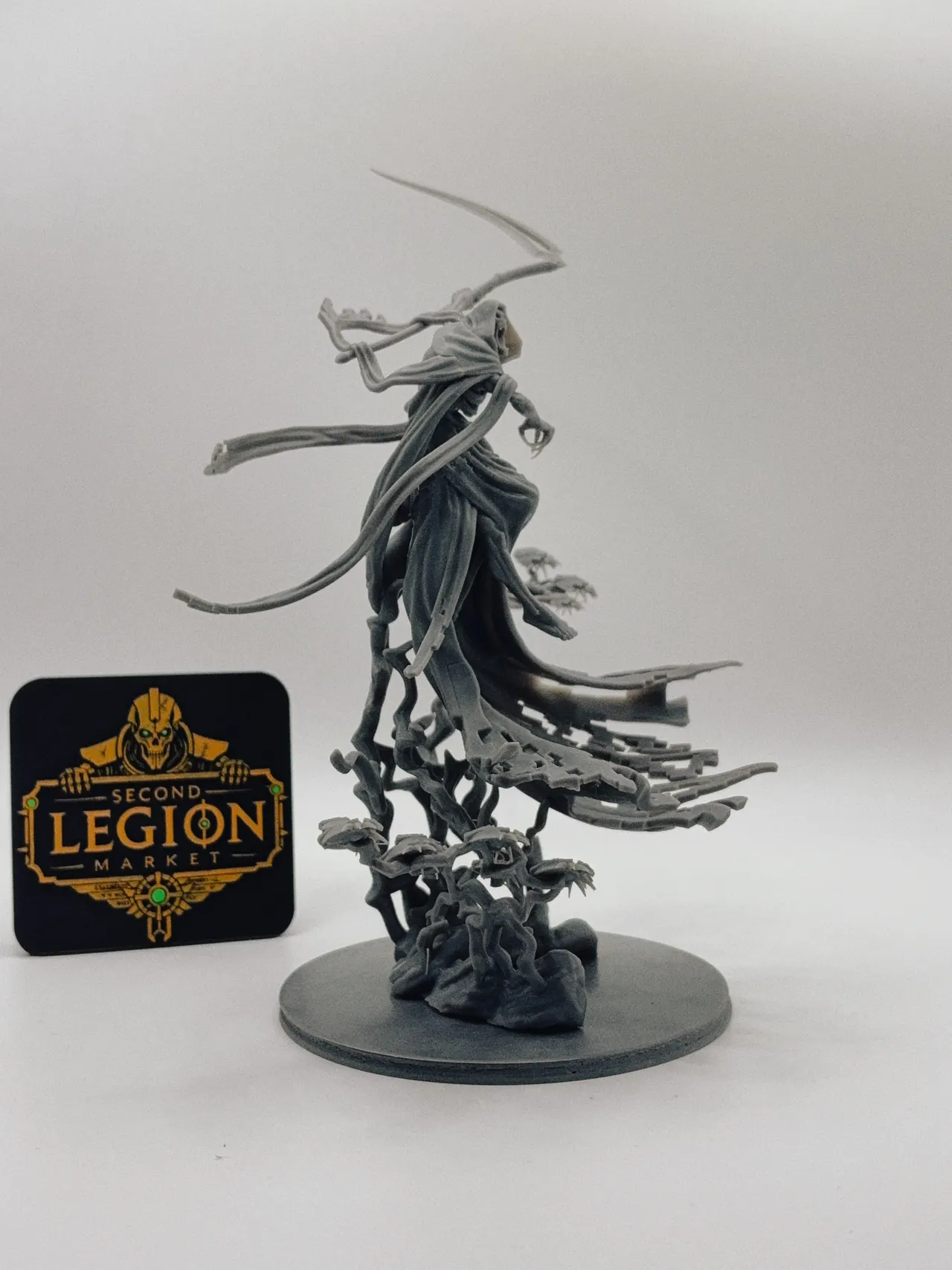
Before the Necrons there were gods. Four stellar entities — the C'tan — that fed on the energies of stars and co-opted the Necrontyr during the War in Heaven. The Necrons, after winning that war, did not destroy their ancient masters — they chained them into Shards, scattered across the galaxy. The Nightbringer embodies death in the cosmic sense: where he appears, living things stop functioning. And he is, precisely, the god Nekrosor Ammentar wants to resurrect.
Brutal lore detail in his datasheet: he cannot be your Warlord (Enslaved Star God — the god obeys, he doesn't command). On the table: Gaze of Death at 18" (D6+3 damage, AP-3), Scythe of the Nightbringer in melee with two profiles — strike or sweep — up to 14 attacks at Strength 8-14. Necrodermis subtracts 1 from every attack's Damage characteristic, Feel No Pain 5+, Reanimation Protocols. And Drain Life: at end of the Fight phase, enemy units within 6" take D3 mortal wounds on a 4+.
It's the second-most expensive piece in the catalogue (€35), a gaunt and dramatic reaper that paints beautifully with drybrush + washes over bone. The C'tan Shard of the Nightbringer is as close as you'll get to fielding a god before stepping up to the king.
6. The Silent King — Szarekh, the last Phaeron
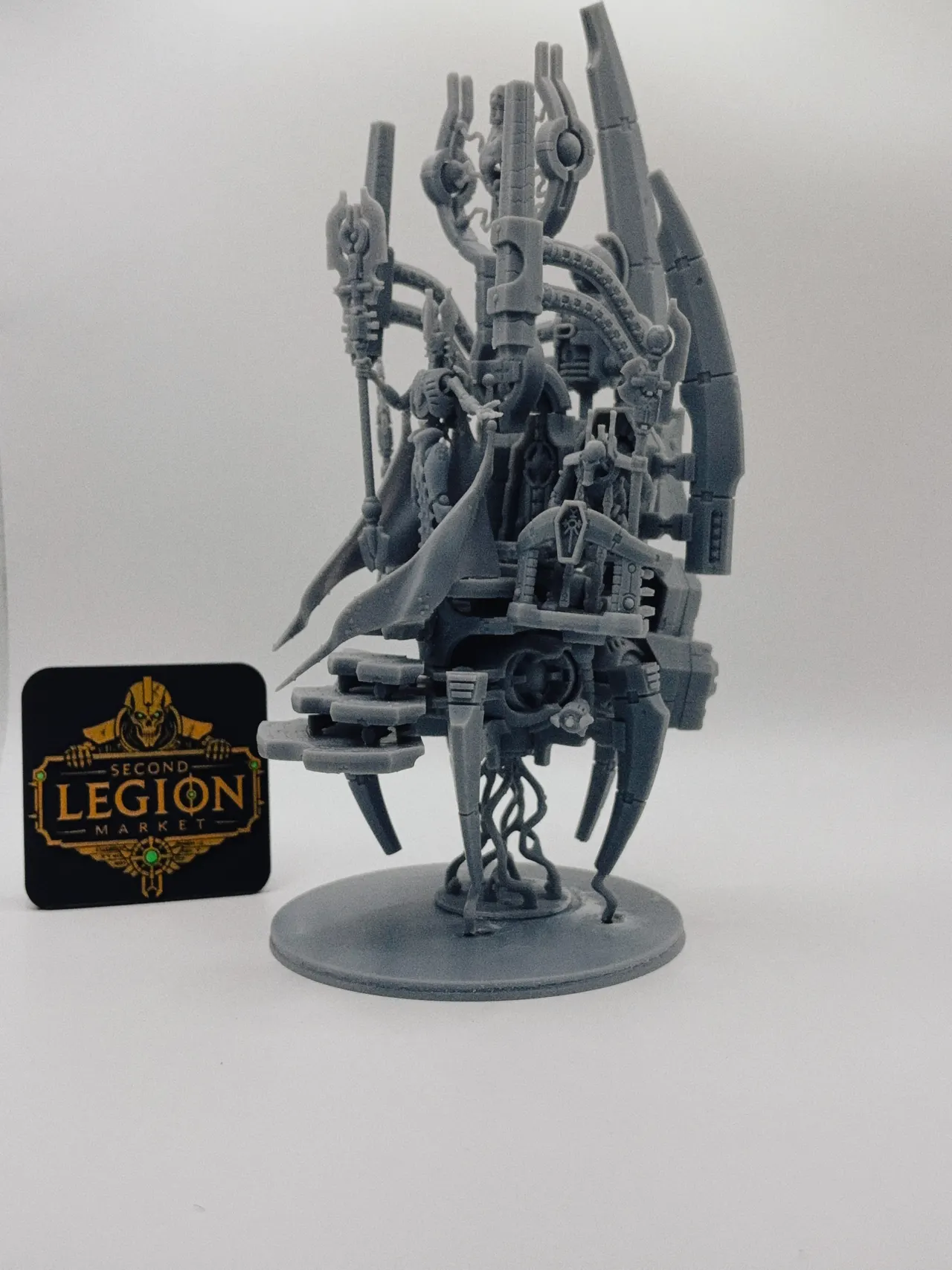
Szarekh was the last Phaeron of the Necron dynasty and the architect of biotransference — the transformation that turned the organic Necrontyr into immortal machines. When he understood the weight of what he had done — souls trapped in alloy, dynasties condemned to a pseudo-existence of command-and-obey — he exiled himself beyond the galaxy for millions of years. His return, narrated by GW in Indomitus, is one of the defining moments of 9th edition and drives everything that came after: the Tyranid war, the reunification of the Necron dynasties, the redrawing of galactic geopolitics.
Epic Hero datasheet. His core mechanic is Triarch Abilities: each battle round you pick one of three auras — Phaeron of the Stars (rerolls of 1 to hit and to wound), Phaeron of the Blades (+1 Strength in melee and reroll charges), or Relentless March (+2" movement to the army). The masterstroke is Voice of the Triarch, which forces the aura to rotate turn by turn and never repeat back-to-back. Add the Sceptre of Eternal Glory (melee with Devastating Wounds), the Staff of Stars (indirect ranged), 16 wounds, 2+ save, Reanimation Protocols, and mandatory Warlord. The king commands.
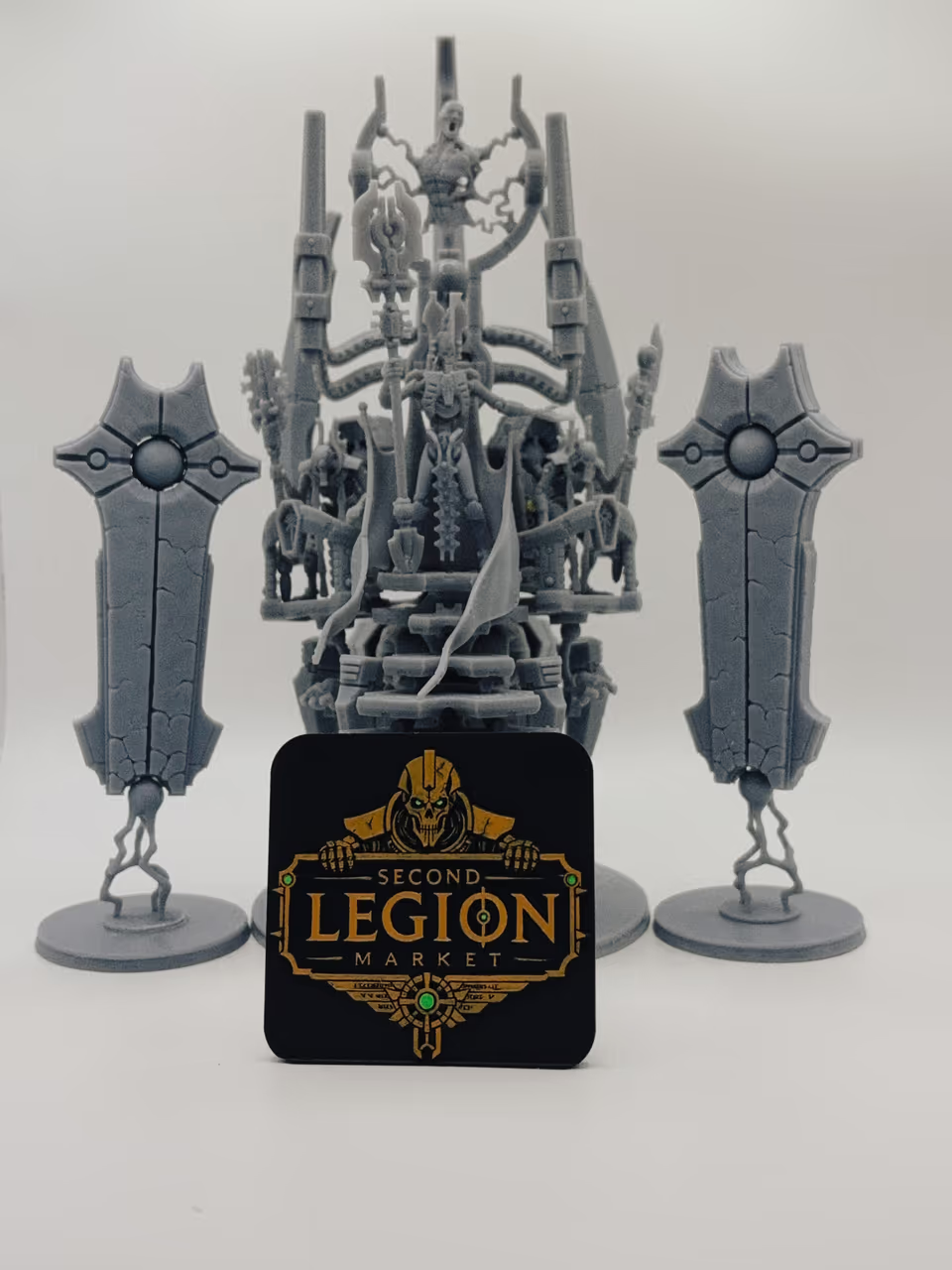
This is the definitive piece: 155 parts, a floating cathedral-throne, two Triarchal Menhirs orbiting Szarekh like moons. The most expensive piece in our catalogue (€44), but also the only one that justifies an entire display shelf. If you take a single Necron home, make it The Silent King.
How to pick your first Necron hero
Entering the faction on a budget: Orikan the Diviner (€13).
Chasing the 2026 hot release: Nekrosor Ammentar (€17).
Want a lethal escort for your first Lord: Ophydian Destroyers (€18).
Love artillery walkers: Canoptek Doomstalker (€20).
Want a god on the table: C'tan Shard of the Nightbringer (€35).
Going for the ultimate centerpiece: The Silent King (€44).
An uncomfortable truth about painting Necrons
The classic Sautekh green scheme is gorgeous and gets you through an army in an afternoon. It also turns your collection into a uniform sea once you've finished two boxes. The trick with Necrons is that every dynasty has its canonical scheme: Sautekh steel-blue, Mephrit gold-copper, Novokh blood-red, Nephrekh pale gold. Each changes what the same miniature is telling you.
And the final uncomfortable truth, same as in the printers article: the difference between a model that looks printed and one that looks finished isn't the codex or the resin — it's the wash, the primer, and the drybrush across the canoptek detail. Buy inside your budget, not above it. The rest is in your hands.